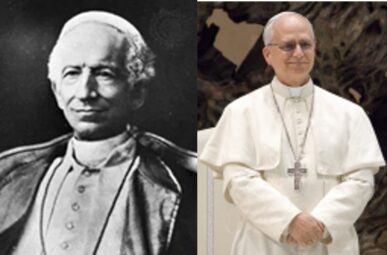

What’s in a name?
Well, the last Leo, Leo 13th, was Pope through the end of
the Gilded Age, a time of industrial wealth and grinding poverty where ultra-rich
oligarchs figured they should run things for their own benefit, abetting
corruption and graft in politics. Leo believed the Church should be engaged in
the modern world. Part of that engagement was that the Church should champion
social justice and human rights.
In 1891, he authored an encyclical called Rerum Novarum
that outlined workers' rights calling for fair wages, safe working conditions
and the right to organize in unions. Another aspect of his modernism was
respect for science. Leo affirmed that science and the Church were not opposed
to each other. The pursuit of scientific knowledge for truth and common good
was virtuous. He promoted the expansion of science programs at Catholic
universities.
Leo was not a radical in either theology or politics. He was a devotee of the theology of Thomas Aquinas (who himself was heavily influenced by Aristotle, who believed truth and justice didn’t come from any one absolutist philosophy — or single social class — but through reason, temperance, and balance.) Rerum Novarum supported workers' rights but also affirmed rights of property and free enterprise. He criticized both laissez-faire capitalism and communism. The social justice movement fed into progressive social democratic politics in the 20th century, especially in political parties calling themselves Christian Democrats.
The guy wasn’t perfect and I’m sure a deeper dive into Leo’s
work will find objectionable things. But at a time of increasing social
inequality, liberal democratic retreat, science under siege, an ascending
oligarchy, and a US president openly calling for a Second Guilded Age, I think
the world could use a little Leo.
Comments are closed!