What the hell is a thudergott?
Some visitors may wonder about the rather odd domain name of this website.
The short answer is that Thudergott (Thew-Dur-Got) is me. I am Thudergott. But
that really doesn’t answer the question. What does it mean? For the answer, we
have to go back to the early days of the World Wide Web, a typo, and a group of clever,
erudite, and only slightly demented men called The Emily Chesley Reading
Circle.
The Thunder God of Cyberspace
Back in the 1990s, I was something of an evangelist for the Internet. I was writing a weekly column on office technology for the London Free Press. It was basically about personal computers but “Office Technology” sounded better for the weekly business magazine (Business Monday). It also gave the advertising department a place for ads for Cannon copiers and HP printers.
I liked to call it a column about PCs in business and about the business of PCs. A challenge for the column, which I started in 1987, was that most of the Interesting and groundbreaking developments in microcomputers had occurred in the 80s. Things like spreadsheets, database management, word processing, desktop publishing, and graphical user interfaces (like Windows) were becoming old hat.
The advent of the public Internet, and particularly the World Wide Web, helped reinvigorate my column. Now in addition to all the wonderful things you could do with a computer right on your own desk, there was this whole universe opening up. Your computer could be a gateway to that universe.
This was a very exciting time, a time for pioneering early adopters exploring the boundless possibilities of cyberspace. The future was bright, optimistic, liberating, and democratic, a creative wonderland. This was long before corporate techno-robber barons took over. For more on that see anything Cory Doctorow has written about the enshitification of the Internet.
Beyond my column I was blessed to be in a position to explore the Internet before it became a thing. The “public” Internet was born in the spring of 1993. But the underlying protocols and architectures had been around for more than a decade. It was limited largely to certain high tech (typically defence) industries as well as government and educational institutions. I was working at a university then and learned that my desktop computer (a Macintosh) was already connected to the Internet via the campus network.
When the World Wide Web and “.com” domains became widely available, I was already there. I even had a Web page make a “best one hundred on the Web” list. Remember though that at the time there were only a few thousand pages on the entire Web.
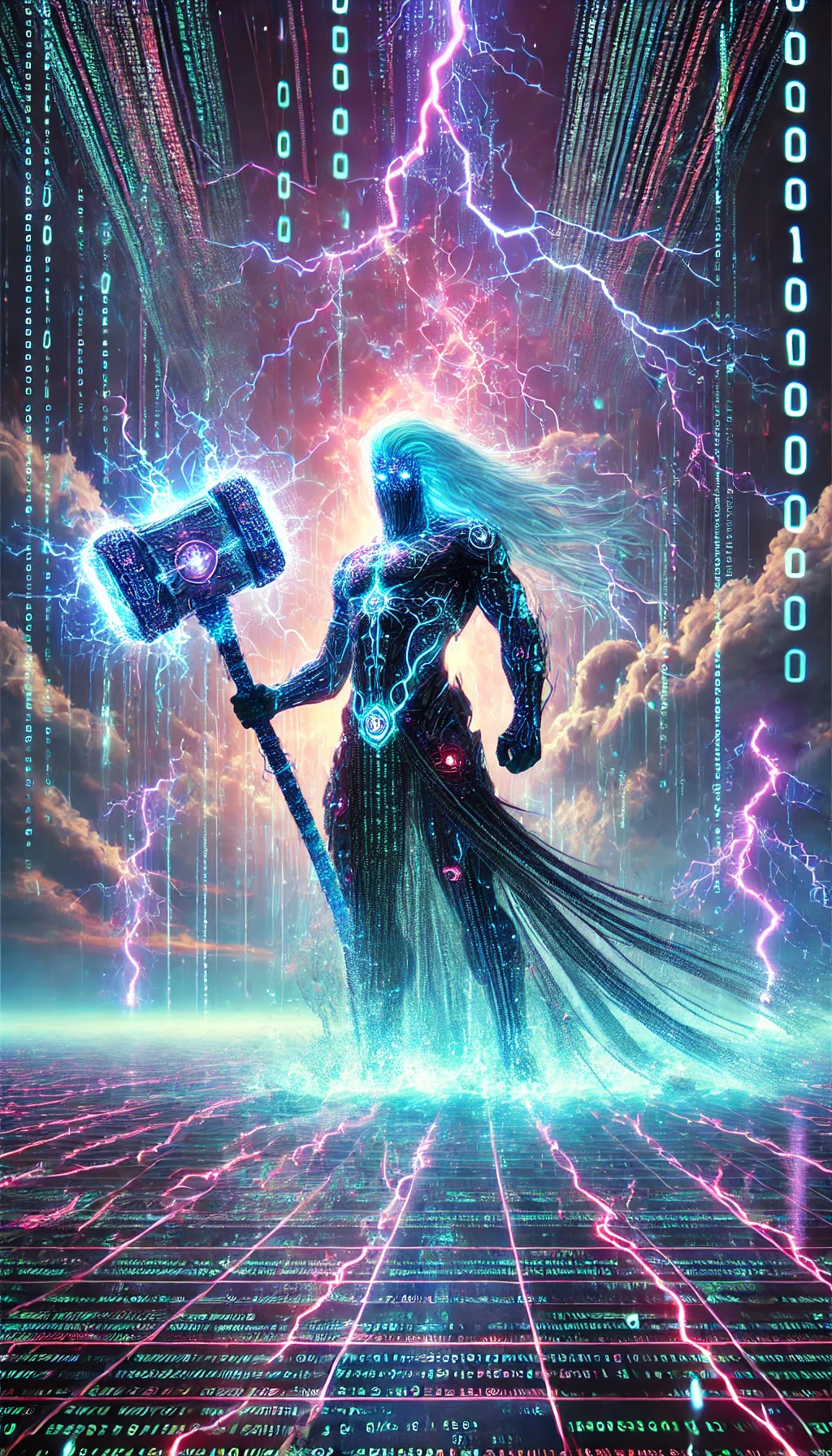
This is what Dall-E "thinks" the Thunder God of Cyberspace should look like.
I was a now a full-on cyber geek. I read a book, by MIT Media Lab co-founder Nicholas Negroponte, called being digital about how the future would be more about the creation and moving around of bits (digital) than moving around atoms (physical). I had a subscription to Wired Magazine. As a tongue in cheek nod to the Web evangelism, I started adding the title “Thunder God of Cyberspace” as a signature in personal e-mail to friends.
Emily Chesley and Rise of Thudergott
The friends who got the e-mails signed “Thunder God of Cyberspace” were mostly my colleagues in something called the Emily Chesley Reading Circle. The Circle was formed in 1998 as an interesting excuse to get together and drink beer.
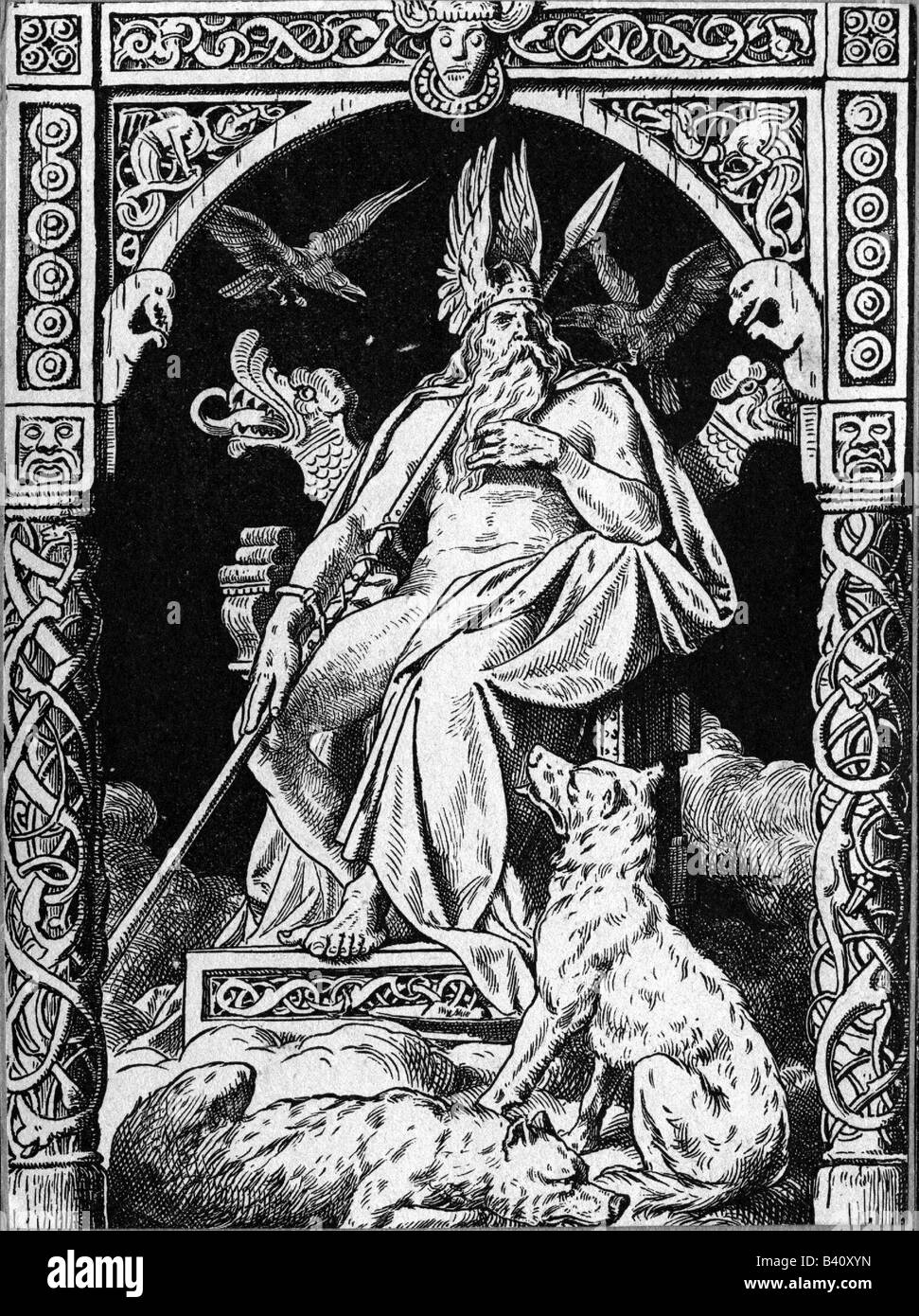
Das Thudergott
(Actually, it is Odin, but you get the idea.)
We would gather in a London pub to honour Emily Chesley, the greatest speculative fiction writer of the Victorian era that London, Ontario, had never known. At our regular “Reading Nights” we would exchange pieces that had been written about or by Emily Chesley: biographical monographs, stories of the inventions of Emily’s eccentric uncle Michael Flanegan, book summaries and excerpts, even some poetry.
This private joke would produce or inspire some surprisingly public artifacts, including a content rich website, a faux journal of Chesleyan scholarship, and a stage play about Emily Chesley mounted by a St. Catherines-based theatre troupe called Suitcase in Point.
When a group gets together to pursue a common cause — whether it be recreation, creation, team sports, or combat — nicknames abound. The Emily Chesley Reading Circle is no different in this regard. We have “The Squire” Rayner, “Flyboy” Lurie, and “Foothills” Ruddock. The monikers each have their own backstory. Nicknames are also usually brief, a single word or two. “Thunder God of Cyberspace” is more a title than a nickname. Too long. They abbreviated it as “TGCS” (sounds almost like TGIF).
We didn’t have social media platforms in those days, so our digital communications were via e-mail, most typed out and read at work when we were supposed to be doing important things. One day came the fateful typo. In referencing me in one e-mail a member of the Circle meant to write “the Thunder God” but instead wrote “the Thuder God”.
I thought Thuder God sounded vaguely Germanic, like a character in a Wagnerian opera: Das Thudergott. I suggested that my new nickname could be Thudergott. The suggestion was taken up enthusiastically. From then on, I would be Thudergott, often abbreviated to just Thuder. (That’s Thew-Der, not Thud-Der, please)
Sir or Madam Will You Read My Book?
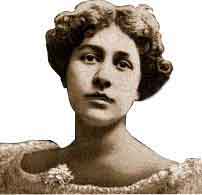
Emily Chesley
If you have enjoyed this little trip to another time and place, you may enjoy reading a book I have written. The working title is Thongs for the Memories: A Literal Memoir of the Emily Chesley Reading Circle. The story begins with me and my wife Marg, as well as other members of the Emily Chesley reading circle and their significant others, watching a young woman dressed only in a thong and bustier crawl across the stage in a little theatre in St. Catharines in July 2003.
The young woman was acting the Thong Bank Incident, a scandalous event that was said to have occurred during the infamous Victoria paddle boat disaster in London in 1881. The Victoria disaster really happened but the other bit, the bit with the thong, was invented by me for one of those biographical Emily Chesley monographs.
Sitting in this theatre watching this extraordinary site, I was compelled to ask myself “How the hell did we get here?” The book seeks to answer that question, going back to the founding of the Circle in 1998 and recounting the our many adventures, in the real world and cyberspace, over the next five years.
Stay tuned for more. The memoir has gone out to prospective publishers as you have read this story.
Wish me luck!
Thuder